

Cricket is a game filled with exciting moments, close contests, and difficult decisions. Sometimes, a batter is given out when they are actually not out. At other times, a bowler feels that the umpire has made the wrong decision. Since umpires have only a few seconds to make a call, mistakes can happen.
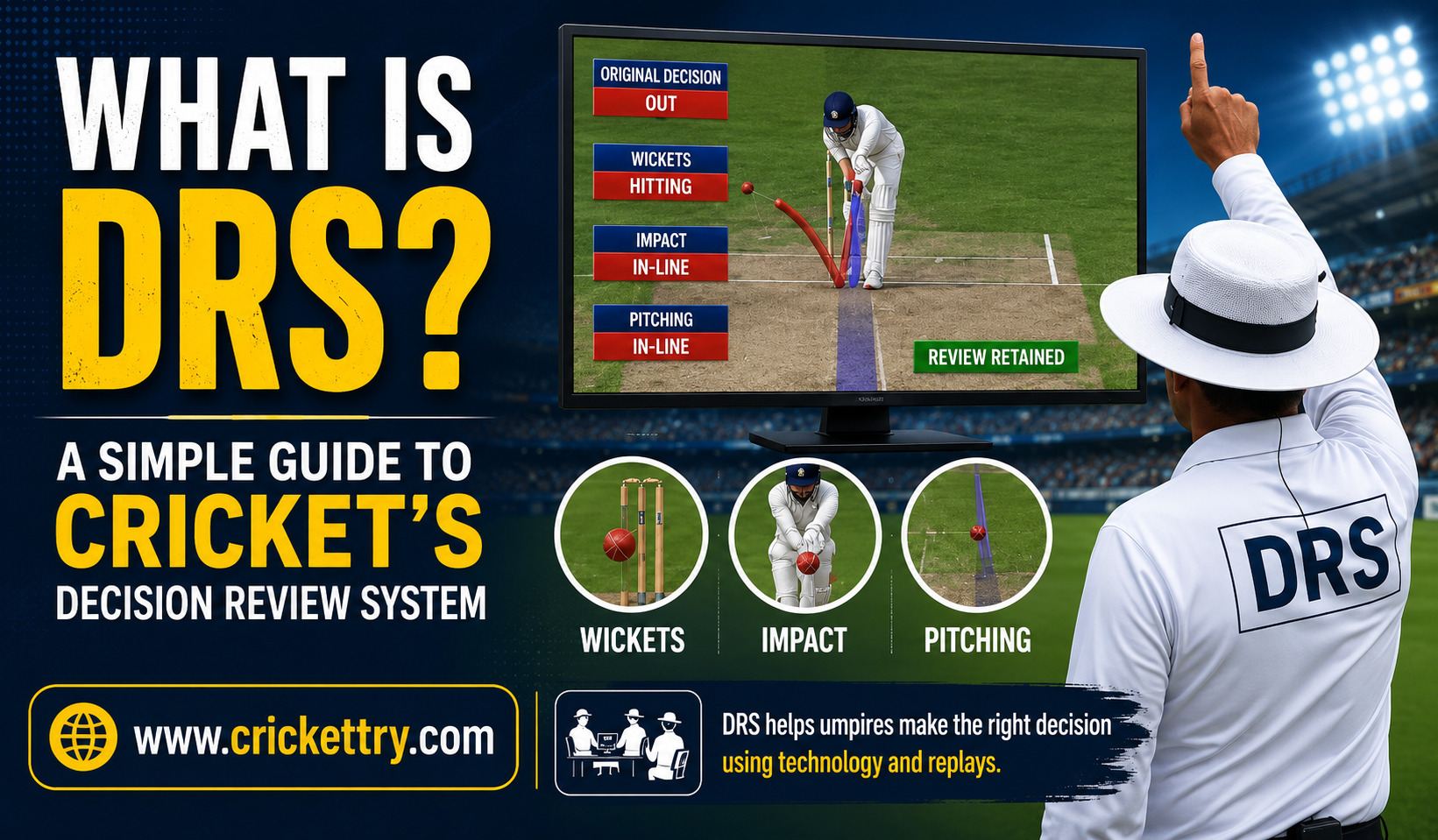
To reduce these mistakes, cricket introduced a system called DRS, which stands for Decision Review System. It helps teams challenge certain umpire decisions by using technology to check whether the original decision was correct.
If you are new to cricket or have heard commentators talking about DRS but never fully understood it, this guide will explain everything in simple language.
What Does DRS Stand For?
DRS stands for Decision Review System.
It is a technology-based system used in cricket to help umpires make more accurate decisions. Instead of relying only on what the umpire sees, DRS uses cameras and other tools to review the incident from different angles.
The main goal of DRS is simple: to make the game fair by reducing wrong decisions.
Why Was DRS Introduced?
Before DRS, the on-field umpire’s decision was final. If the umpire made a mistake, there was no way to change it.
Many important matches were affected by wrong decisions. A batter could be wrongly given out, or a bowler could miss a wicket because an appeal was turned down.
As technology improved, cricket authorities decided to use it to support umpires. This led to the introduction of DRS.
Today, DRS has become an important part of international cricket and many major tournaments.
How Does DRS Work?
The process is quite simple.
Imagine a bowler appeals for a wicket, but the umpire says “Not Out.”
The bowling team believes the batter is actually out.
The captain or the bowler can ask for a review.
The third umpire then checks the incident using different camera angles and technology before making the final decision.
If the review shows that the batter is out, the original decision is changed.
If the review supports the umpire’s decision, the original decision stays the same.
Who Can Ask for a DRS Review?
Only the players on the field can ask for a review.
For the batting team, the batter can request a review after being given out.
For the bowling team, the captain usually decides whether to review a “Not Out” decision.
Spectators, coaches, or commentators cannot ask for a review.
When Can a Team Use DRS?
Teams can use DRS only for certain umpire decisions.
These include:
- LBW decisions
- Caught behind decisions
- Edge before catch
- Some close catches
- Certain run-out situations checked by the third umpire
Not every situation in cricket can be reviewed.
What Happens During a Review?
Once a player signals for a review, the third umpire begins checking the decision.
The review usually follows these steps.
Step 1: Watch the Replay
The third umpire watches the incident from different camera angles.
Slow-motion replays help in understanding exactly what happened.
Step 2: Check for an Edge
If the batter may have touched the ball with the bat before it reached the wicketkeeper or fielder, technology is used to check for a small edge.
This helps determine whether the batter actually hit the ball.
Step 3: Check the Ball’s Path
For LBW decisions, the system checks where the ball pitched, where it hit the batter, and whether it would have gone on to hit the stumps.
Step 4: Final Decision
After reviewing all the available information, the third umpire tells the on-field umpire whether to stay with the original decision or change it.
The on-field umpire then gives the final signal.
How Many Reviews Does Each Team Get?
The number of reviews depends on the format and the playing conditions.
Generally, each team gets a limited number of unsuccessful reviews during an innings.
If the review is successful, the team usually keeps its review.
If the review is unsuccessful, one review is lost.
Because reviews are limited, teams must use them carefully.
What Is a Successful Review?
A successful review means the original umpire’s decision changes.
For example:
- Batter is given out.
- Batter reviews.
- Technology shows the ball missed the stumps.
- Decision changes to “Not Out.”
In this case, the batting team keeps its review.
What Is an Unsuccessful Review?
A review is unsuccessful when technology agrees with the umpire’s original decision.
For example:
- Bowler reviews a “Not Out” decision.
- Technology confirms the batter is not out.
- Decision stays the same.
The bowling team loses one review.
What Is LBW?
LBW stands for Leg Before Wicket.
This happens when the ball hits the batter’s leg instead of the bat, and the umpire believes the ball would have gone on to hit the stumps.
LBW decisions are often very close.
DRS helps make these decisions more accurate.
What Technology Is Used in DRS?
Several technologies work together during a review.
Ball Tracking
This technology follows the path of the ball.
It shows:
- Where the ball bounced
- Where it hit the batter
- Whether it would have hit the stumps
This is mainly used for LBW decisions.
UltraEdge
UltraEdge checks whether the ball touched the bat.
Even a very small contact can be detected.
It is useful for caught-behind appeals.
Slow Motion Cameras
High-quality cameras record every moment from different angles.
These replays help the third umpire examine close catches, run-outs, and stumpings.
What Is “Umpire’s Call”?
One of the most discussed parts of DRS is Umpire’s Call.
Sometimes, the technology cannot clearly prove that the umpire’s decision was wrong.
In such cases, the original decision remains.
For example:
If the ball is only just clipping the stumps and there is not enough evidence to overturn the decision, the umpire’s original decision stands.
This rule respects the on-field umpire’s judgment when the evidence is not clear enough.
Why Is Umpire’s Call Important?
Cricket is not an exact science.
Even with advanced technology, there are situations where the result is extremely close.
Instead of changing every close decision, Umpire’s Call allows the original decision to remain unless there is clear evidence that it was incorrect.
This helps keep the balance between technology and the role of the umpire.
Does DRS Make Cricket Perfect?
No.
Although DRS has greatly improved decision-making, it is not perfect.
Technology can reduce mistakes, but it cannot remove every possible error.
Very close catches, tiny edges, or difficult viewing angles can still lead to debate.
However, DRS has made cricket much fairer than before.
Advantages of DRS
There are many reasons why DRS has become an important part of modern cricket.
More Accurate Decisions
Technology helps reduce human mistakes.
Fair Competition
Both teams get a chance to challenge doubtful decisions.
Better Confidence
Players trust that close decisions can be checked.
Exciting Moments
Reviews often create suspense for players and fans.
Everyone waits to see the final decision.
Supports Umpires
Instead of replacing umpires, DRS helps them make better decisions.
Disadvantages of DRS
Like every system, DRS also has some limitations.
Limited Reviews
Teams cannot review every decision.
They must think carefully before using a review.
Close Calls
Some decisions remain controversial even after technology is used.
Time Taken
Reviews can slightly slow down the game.
However, most reviews are completed within a short time.
Different Opinions
Fans sometimes disagree with the final result, especially when Umpire’s Call is involved.
Can Players Review Every Decision?
No.
Players can review only certain types of umpire decisions.
For example, they cannot review every wide ball or no-ball decision during normal play.
The review system is mainly used for dismissals and a few other important decisions.
Does DRS Exist in Every Cricket Match?
No.
DRS is mostly used in:
- International matches
- ICC tournaments
- Major Test series
- Most ODI series
- Most T20 International matches
- Popular franchise leagues
Some smaller domestic matches may not use DRS because the required technology is expensive.
Famous Moments Involving DRS
Over the years, DRS has played a major role in many famous matches.
There have been occasions where a batter celebrated after being given not out, only for DRS to show the ball hitting the stumps.
There have also been moments when bowlers thought they had taken a wicket, but DRS proved the batter was safe.
These dramatic moments have made DRS one of the most exciting parts of modern cricket.
Tips for Understanding DRS While Watching Cricket
If you are watching cricket and a review begins, keep these points in mind:
- Watch where the ball lands.
- See whether the bat touches the ball.
- Observe where the ball hits the batter.
- Listen to the third umpire’s explanation.
- Understand that Umpire’s Call means the original decision stays because there is not enough evidence to change it.
With practice, following DRS becomes much easier.
Frequently Asked Questions
Is DRS available in T20 cricket?
Yes. Many international T20 matches and several major T20 leagues use DRS.
Can the crowd ask for DRS?
No. Only the players on the field can request a review.
Can the umpire review their own decision?
Yes, for certain situations such as close run-outs or stumpings, the on-field umpire may refer the decision to the third umpire.
Is every review successful?
No. Some reviews change the decision, while others confirm the umpire’s original call.
Why don’t teams review every close decision?
Because they have only a limited number of unsuccessful reviews. They need to save them for the most important moments.
Final Thoughts
The Decision Review System, or DRS, has changed cricket by making important decisions more accurate and fair. It allows players to challenge certain umpire decisions and gives the third umpire the chance to examine the incident using technology. This reduces mistakes, builds confidence among players, and adds excitement for fans.
Even though DRS is not perfect, it has improved the quality of decision-making in cricket. Features like ball tracking, UltraEdge, slow-motion replays, and the Umpire’s Call rule work together to ensure that the game remains fair while still respecting the role of the on-field umpire.
Whether you are a new cricket fan or someone who has watched the sport for years, understanding DRS makes it much easier to follow close decisions and enjoy the game. The next time you hear a commentator say, “The team has taken a review,” you will know exactly what is happening and why it matters.